Showing posts with label kerala. Show all posts

Wednesday, September 29, 2010

Local heroes : inspiring musical trail stories from Kerala


First batch of students getting their training in 'Idakka'

Njeralathu Rampoduval was a very pious man. He had devoted his life in the service of the Goddess in 'Tirumathaam Kunnu', and touched many lives through his melodious music. The depth in his singing, his mastery over the unique percussion instrument“Idakka” and the spirituality he evoked had hundreds of thousands of people in Kerala who listened to him, connect with their souls. It was no surprise then that when he passed away in 1996, Kerala wept as if it's soul was taken away.

His style of singing, a mellifluous blend of tribal, folk and classical styles, called 'Sopana Sangeetham' was traditionally restricted to being rendered within the temple sanctum sanctorum. Njeralathu made it his mission to bring this form of music to the common man and towards the end of his life, 'Sopana Sangeetham' was commonly heard outside the temple sanctum.

Hari Govindan was 17 years old when his father, Njeralathu died. Hari used to accompany his father occasionally during his travels and performances at various temples and public arenas in Kerala. Troubled that the “Idakka” that was his father’s life, lying unused after his death, Hari taught himself how to play the instrument to keep the memory of his father alive. Soon his mastery over the instrument and his renditions of the “Sopana Sangeetham” won him several fans. Six years ago, a group of Nila admirers who had gathered by the banks of the river, urged Hari to recite a few of his father's legendary compositions. I still remember Hari singing for the River Nila, with tears in his eyes into the night. He had composed one particular song about the river on his way while sitting in a bus!


MP Virendra Kumar (MD of Mathrubhumi) paying a visit at the temple with the Idakka. Kalyanikutti Amma is seen 4th from L, in the background is the house she stays and the land she donated

Two years ago, Hari started campaigning with the Government requesting them to provide funds or build a memorial for musicians like his father. It wasn’t uncommon to see talented exponents of traditional music dying in penury for want of patronage. Hari's idea was to record audio clips of these musicians while they were alive so that the new generation could also experience these rare voices and melodies, while giving them an opportunity to perform. He dreamt of a school where students from all segments of the society could come and learn traditional folk music and especially learn to play the Idakka, experience and spread this unique music and folk culture.

Frustrated with empty promises made by politicians and Government officials, a dejected Hari decided to auction the musical instrument of his father to raise funds to keep his memory and art form alive. The reaction from people across Kerala was extreme. Cultural stalwarts were shocked at his decision and accused him of selling art for money without really understanding his objective. But there were others who shared his anguish and deep desire of building a memorial for his musician father and providing an opportunity for similar musicians to have a place in society to be recognized. Many friends and admirers donated liberally and a wonderful campus was born where students from nearby villages come to learn traditional forms of music for free. Hari also built an impressive digital and non-digital archive of traditional music forms and musical instruments and an open-air theatre. The campus also boasts of a beautiful temple where the idol isn't just another stone sculpture, but the Idakka that his father used to play!


Crowd that gathered for the inauguration of the Kalashramam

This campus also has a small house in an obscure corner facing the hillock. This house belongs to Kalyanikutti Amma, a woman in her late 60s who helped Hari achieve his dream when the Government or the rich landlords in the region failed to do so. It was her generous donation of all her land to this cause that helped Hari build this unique memorial of art that is inspiring hundreds of youngsters today to keep traditional art forms alive. Hari didn't forget to renovate her old house within the campus for her comfortable stay.

In its own small way, The Blue Yonder worked in parallel to support Hari through bringing the attention of national and International media to his laudable initiative. David Stott, travel writer, photographer and editor of Foot Prints handbook for India inaugurated the campus, which got it a lot of well-deserved publicity. When James Newton of String Films, well known UK-based filmmaker visited the campus and saw public reaction to this initiative, he had only two words to describe it. "Mind boggling!"

'Njaralathu Kalasramam' (Kala = Art, Asramam = A learning campus), as the campus is called, is where The Blue Yonder organizes the musical trail for our travellers. In addition to experiencing musical styles of central Kerala, our travelers enjoy living in the beautiful campus as well. It gives us immense pleasure that we were part of the journey Hari started, a journey that proves that ordinary people can be the change makers, and accomplish extraordinary feats!

More on how Njaralathu Hari Govindan became part of The Blue Yonder in the upcoming blogs. Watch this space.

Wednesday, August 25, 2010

Master carpenter of River Nila...


The village of Panniyoor on the banks of River Nila (Bharatapuzha) once decided to build a temple complex that would be better than the ones even in Heaven! The onus of building this marvel fell on their master carpenter, Perumthachan.

With a team of fine carpenters in the region, Perumthachan started the work and soon the news spread to the Heavens that the architecture of the temple complex in Panniyoor village had the potential to overshadow the splendour of the Gods. As insecure as only he could get, Lord Indra, the King of Gods himself, set out on a journey to the village to find for himself if there was any truth in these rumours. Once he saw the brilliance of the work in progress, he was overcome with envy and started plotting against the carpenters’ team.

Read the complete post on legends of Nila...posted on The Blue Yonder. blog

Friday, July 16, 2010

Media responsibility on palliative care


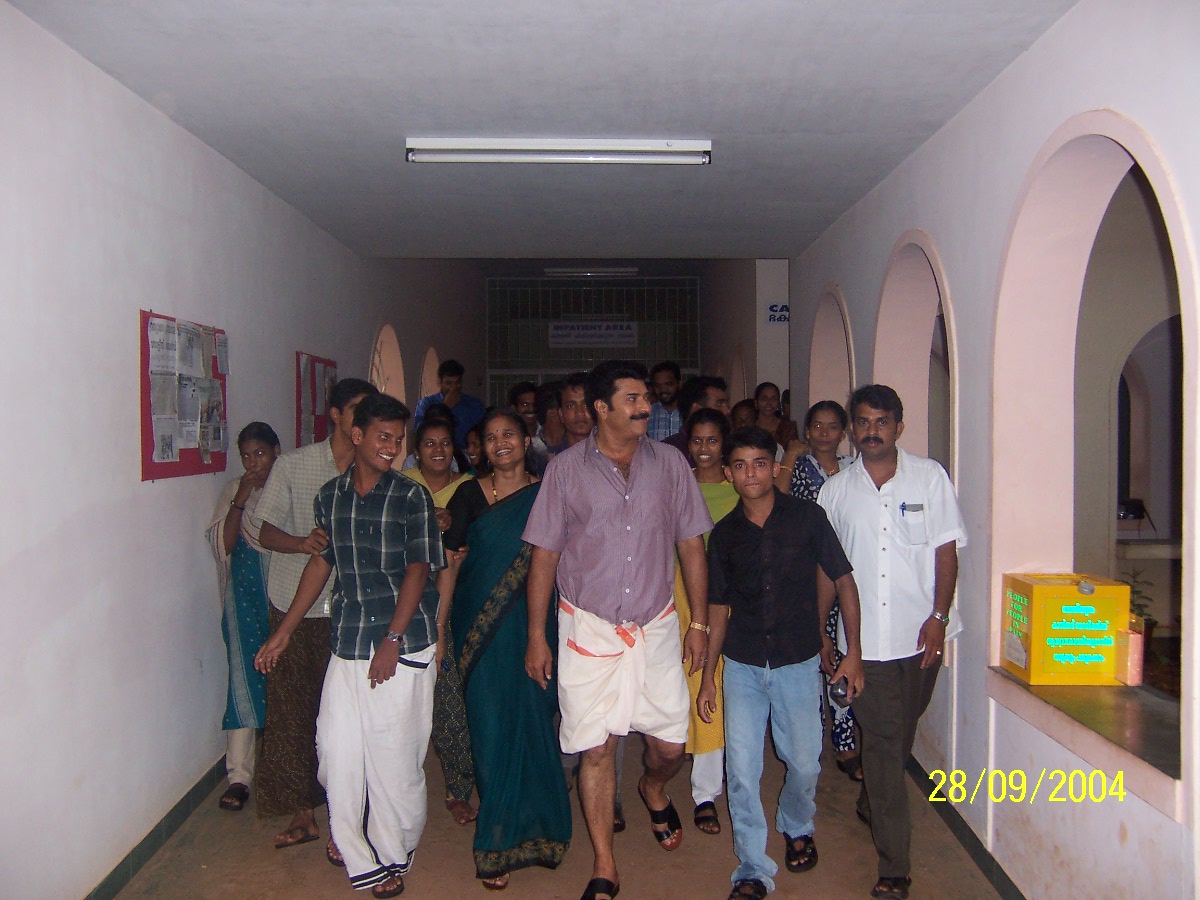
Photo:Malayalam movie actor Mammooty on his frequent visits to the palliative care clinics in Calicut

A report in today's Times of India screams 'India worst in end-of-life care'. The report rightly laments about the poor condition existing in the 'end of life care' and how India is lying at the bottom of 40 countries from which sample data has been collected. It's true that a newspaper should highlight such a sad state of affairs in a vastly growing economy like India. TOI reports, 'India doesn't just have a poor quality of life, as reflected in its poor human development index (HDI), it also has a particularly poor 'quality of death'.

However what is missing in the news report are some of the highly positive remarks in the original white paper published yesterday by Economist Intelligence Unit on issues surrounding end-of-life care. It says "Amid the lamentably poor access to palliative care across India, the southern state of Kerala stands out as a beacon of hope. While India ranks at the bottom of the Index in overall score, and performs badly on many indicators, Kerala, if measured on the same points, would buck the trend. With only 3% of India’s population, the tiny state provides two-thirds of India’s palliative care services. More over, the state has a formal palliative care policy in place (it is the only Indian state with such a policy)and its government provides funding for community-based care programmes. It was also one of the first of India’s states to relax narcotics regulations to permit use of morphine by palliative care providers. Kerala has also extended the definition of palliative care to include the long-term chronically ill and even the mentally incapacitated."

The report highlights the success story of palliative care movement in Kerala that uses holistic and unconventional approaches compared to institutionalised western approaches. What started in a dressing room of two anesthetists in Calicut Medical College is now the most unique approach to palliative care that is being replicated in countries like Bangladesh, Seychelles and even Switzerland.

While reporting on the sad state of affairs in India vigorously, Times of India could also have inspired many with the success story of palliative care movement in Kerala. With more than 250 self-funded palliative clinics and a massive volunteer base that crosses 20,000 trained volunteers who re-defined community participation in health sector, there are plenty of learning for many other Indian states.

This success story of palliative care movement has to be told mainly because the Government - Public participation (especially community involvement in fund raising and caring) is something that can be replicated in other parts of India. As Dr. Suresh Kumar, Director of Institute of Palliative Medicine says, “there are a lot of medical problems, but there are also a lot of
social, spiritual and financial issues—so anybody who has time to spare can, if properly trained, take care of these people,”.

Indians have heard enough of negative things about their country. It's time we celebrate success stories. Media has a role to play in it.

Friday, August 1, 2008

Travellers Forest


Pic: These Dutch students were the first to plant saplings at the Travellers Forest
International flight companies and tour operators are now accepting their contribution to the carbon emission and atmospheric pollution. They also want to play a proactive role in offsetting the adverse affects of carbon emission. Though there are many alternatives that are being talked about on carbon-offset, investment in sustainable energy, greening the globe by planting trees etc come as some of the solutions for carbon offset. We have heard about million dollar projects (much before the global warming) run by several international and national agencies and Government departments that disappeared in no time and planting of exotic trees that killed the local flora and fauna and even created water crisis. Other than eating up tax-payers money, none of this actually did anything positive to the environment, mostly because of lack of local consultation and community participation.

More and more green cover is being lost in even places like Kerala which even until recently had approximately 30% of forest coverage. In today’s value frame work, which promotes and accepts exploitation of natural resources for private material gains, its becoming more and more difficult to motivate local communities with the arguments of global eco-restoration.

Any greening project as part of the eco-restoration will not be successful if the local communities are not the main stake holders. Our small initiative of setting up Travellers forest in association with travelling communities and local communities is actually a small step to bring back the lost green cover that could influence the global weather restoration process, which in turn will also restore the natural hydrological cycle.


Pic: Travellers becoming part of a green movement in Nila!
The value of land (in the context of Kerala) is shooting up exponentially, community lands and even the Government / Panchayat lands are considered too precious to be “wasted” by planting trees. It is in this context that we are looking at bringing in private partnerships to be flag-bearers of greening movement. We realize the fact that eco-restoration is much easily said than done. It is in this context that Nila Foundation in association with Kodeeri Nature Camp and The Blue Yonder decided to come up with Traveller’s Forest.

First such travellers Forest was inaugurated yesterday in Naduvatton village.
Munich © GP 2008

Sunday, June 22, 2008

River Nila covered by Mint - Lounge


Interview with Sumana Mukherjee. Words like "breathing new life into Kerala's Ganga" makes one think that the River is all live and kicking now. Earlier Travelmole also carried a story with a title "Responsible Tourism averts threat to Kerala's dying river!" Irrespective of the global attention that is now falling on our small river, as a colleague once mentioned, the truth could be that when we started working it was a dying river and now probably its a dead river! But I can certainly agree to the fact that we have managed to bring together like-minded people to think and respond to the status of our river.

München © GP 2008

Friday, January 11, 2008

Steering a tricky course


"As rapid development threatens to dent Kerala's reputation as an eco haven, Kevin Rushby meets the greens fighting to preserve the traditional way of life" The Guardian, Saturday January 12 2008.

Fragrant Nature, Marari Beach Resort, Friday's Place, Ayurveda Mana and The Blue Yonder is mentioned. One or two facts are misplaced, and the there are no direct links to our website anywhere. But when the article is covered in a website that is ranked in the top 700, and is one amongst the most read online news papers in the world, you don't complain much.

Full article is here

Bangalore © GP 2008

Monday, December 31, 2007

Grandeur of a by-gone era - Poomulli Mana


Many hundreds of years before this was only a granary of the palace!

'Poomulli Mana' and 'Aaraam Thampuran' was always part of the legends we grew up with. It's a shame that I never ventured to the 'Mana' until we started The Blue Yonder even if it was less than 30 minutes from my village in Alathiyoor. The Mana, considered to be a repository of local knowledge have seen many stalwarts, amongst whom the most famous was late 'Aaraam Thampuran', Poomully Neelakantan Nampoodiripad, who was also fondly called as the 'Lord of Knowledge'.

Preserved through Responsible Tourism - the centre now offers Ayurveda treatment and wellness

An authority in Sanskrit literature, Ayurveda, Toxicology, Paediatrics, treatment of elephants, Yoga, Martial arts (Kalari payattu), Astrology, Percussion (Viz. Thayampaka) and Kathakali to name a few, he is revered by thousands of families who have been touched by his knowledge at some point of time in their life time.


Mana still continues the tradition of 'Kalari payattu', traditional martial arts of Kerala.

Once a palatial courtyard, Poomulli Mana has a history dating back to 500 years in a small village called Peringode along Bharatapuzha (River Nila) which literally became a knowledge centre because of its association with the family. The Namboodiri family's origin dates back to 900 years or so and were originally from 'Oorakam' of 'Peruvanam' village (one of the 64 ancient villages of Kerala).


some of the old structures in the courtyard

Like what happened to many other historic properties in Kerala, most part of the Poomulli Mana was also dismantled because of the huge cost involved in maintaining the old structure. In late 80's and early 90's, many Malayalam newspapers like Malayala Manorama and Mathrubhumi and the English daily The Hindu had carried stories about the 'Grandeur of a by-gone era'.


Old timers say that there were 4 ponds bigger than this inside the palace building itself!

If Responsible Tourism was in place at that time, may be this entire palace compound could have been saved and preserved as its done now with whatever little is remaining now. An entrepreneur Sajeev Kurup from Paithrukam Hospitality Services convinced the family run trust to look at health tourism as a tool to preserve the buildings which were in a state of decay.

The building that accommodates the present 'Ayurveda Mana' is an architectural splendour. For many of us from this generation, it's difficult to believe that this majestic building was used only as a granary (Pathaaya pura) !

I wonder how the old 'Mana' would have looked like!

One of the first members of The Blue Yonder Associates, Ayurveda Mana practices tourism that is environmentally friendly, socially and economically beneficial to the local people and culture. The place is now one of the major attractions for travellers visiting River Nila to understand its culture and heritage.

Bangalore © GP 2007

Saturday, December 15, 2007

Ministers, people and awards


Pic: Memento created by one of our artisans depicting the universal theme of eco-history of communities

Last month our community members working under the umbrella of Vayali Folk Group mentioned that they were planning a gathering of indigenous people of River Nila in Thrissur at the Sahitya Academy Hall. The idea was to acknowledge the work of great folk artists from Nila and appreciate them for the invaluable contribution to the unique river valley civilisation. When they told us that they also wanted to give a memento to The Blue Yonder for bringing in attention to River Nila and the efforts we have taken to revive and support art forms along Nila, we were not sure what was coming. It was after the Conde Nast traveller awards that they decided that our work needs to be acknowledged by the stake holders within our project area.

In front of a small gathering of people who shared the angst of a dying river, the Revenue Minister Mr. K. P. Rajendran handed over a beautifully crafted memento (in the picture )created by one of our partner artisans ‘Narayanettan’. We would have preferred to have that acknowledgment not from a minister who had no clue about what we do, rather through a smile that we exchange normally with our community members. In the quick gate crash he made to the stage, we could hear the Minister asking Vinod, coordinator of Vayali, “who, what, Blue Yonder?”.

We can’t blame the Minister for not knowing TBY or our work, but he should have at the least a courtesy to find out why he was requested to be there by the organisers before he stood upon on the stage. Just beore giving the award, I could hear him talking about the contribution of TBY in Responsible Tourism and proud he is to see local initiatives like this ....(sigh!)

Well, since Ministers are busy running from one meeting to another and declaring one statement after the other across the state, one can’t blame if they don’t find any time to figure out why they are there. Minister’s presence might be a media attention and he even came there because he genuinely wanted to support the initiatives of the organisers in documenting and reviving folk art forms in Valluvanad region of Nila. But we were aghast to hear the statements he was giving in his capacity as a Revenue Minister of Kerala. “Nila, as we all know is being abused and it is so much part of our culture, environment etc etc……and also considering the degradation that is happening we have decided to release Rs 5 crores (1,270,648.99 USD) from the River Management Fund.” Then there was a flood of offers, about engineering departments and water authority of various levels being involved in many other projects.

After the Minister left we were wondering about the number of committees being set up and how many more dollars are passing hands before they all put the final nail on the coffin, which could be our Nila!.

Irrespective of the mumblings of the Minister, it was great to see many of our activity partners ( Thoni Cruise, Martial Arts experts, Folk artists, Potters, Ritualistic healers etc) being recognised in public for the first time and that too in the presence of people like Sankar of KFRI, who could connect with the people and understood why they were there.

Amongst other recognitions we have received in the last four years, we don’t think there will be any other that will remain so close to our heart than this appreciation from our own people.

Tirur © GP 2007

Tuesday, March 27, 2007

Puzha Malayalam


Like many other review meetings of the foundation, today's was not any different. Full of intensity!!Sujith and Jamal came from Thrissur to our village quite early in the day. Even though he had spent most of the night reading the proof for his magazine "Hygiene", Arun also came home by 8 to start the work. (BTW, Arun is also the Chief Editor of the widely circulated "inland" magazine. I guess, probably this magazine is the one of the few that reaches every nook and corner of Kerala through all the post offices)

Since our publication of "Puzha Malayalam" got delayed beyond its revised target date of 22nd of March 2007, we are working hard to concentrate only on the book and nothing else. ("Puzha (meaning river) Malayalam" is a publication on the status of rivers in Kerala which was commissioned by Nila Foundation three years before).

Solely supported by The Blue Yonder, this research work has given a lot of insights into our own backyard which we wouldn't have noticed otherwise. From unique farming traditions to legends and folklore related to the rivers of Kerala, the amount of material the small team has collected in the last three years is simply mind boggling and exciting. No wonder we are all impatient to see the final proof from Sujith and Uma (who are the main researchers).

The half day meeting was well focused on our work and the resources that is needed to take the movement forward in a way that makes this as participatory as it is possible.

Tirur
© GP 2007

Thursday, February 8, 2007

Better Together


Bangalore
So relieved now that the workshop on RT is over in Trivandrum. Back in Bangalore and back in office. Just the load of work that needs to be attended is mind boggling. Flying out on the 26th to Europe only to be back by mid March doesn't make life any easier. But well, occupational hazards and I am not complaining :)

What happened in Trivandrum?
More than hundred and fifty people turned up from the Industry, NGOs, Civil Societies, Panchayats, Government, Media and Academicians. Industry participants were probably the lowest of all. Various reasons were pointed to this poor turn out from the industry

1) Last minute invitation
2) Most of the invitees being from the medium segment of the business, they were busy with their guests and couldn't move out. For e.g Raheems Residency and Philipkutty's farm
3) Lack of clarity regarding the role of Equations along with the Kerala Tourism Department. Not many were clear about why Kerala tourism decided to rope in Equations especially after the campaign against the department when Kerala was nominated for the Destinations for Tomorrow awards from WTTC, London

What impressed me the most?t
1) To see the active and enthusiastic participation of the Panchayat members.
2) Demands from the Panchayats to have more tourism projects in their area
3) Industry members unanimously suggesting that they will work together with the Panchayats, Self Help Groups of women (similar to Kudumbashree units) and local community members.
4) Industry suggesting that if the quality of the products and services can be assured, they will be keen on procuring materials and skills locally which will definitely increase the positive economic linkages.

Did we lose focus on the first day?

The way the event was organised and structured, we didn't give enough time for all the sectoral subgroups to raise their concerns, discuss it and address it. Especially since it was after long time any sort of consultation with various stake holders were happening, most of the participants used this as an opportunity to raise their concerns about many things that were out of the focus of the workshop (defining responsibility of stake holders in tourism!).

I think it would have more successful if we had kept exclusive days for various stake holders. Even on the second day, the industry group sounded very cautious in terms of their participation. I guess with members from the media and even from NGOs that constantly criticise them being present there, not many of the industry felt comfortable enough to talk.

The way forward?
A committee of around 40 members from various stake holding groups have been identified to function as a working group. Once the documentation and transcription is done, the working group will be meeting together to work on the action plan.

Being part of this workshop was the most emotionally draining experience in recent times for me for various reasons. Intellectually, it was not that stimulating; but the challenge was to work with various kinds of people with that many different agenda in their mind!

Well, I hope I will be responsible (or brave?) enough to write about those experiences in the coming days!

© GP 2007

Wednesday, January 24, 2007

Paying the price

Bangalore

"Section 144 declared in Tirur, Tanur,Tanalur and Kalpakanchery police station areas"
"One more!. An auto driver from Iringavoor is fighting for life"
"Latest news - Three more attacks this morning. One Hindu and two Muslims. Situations becoming worse"

The above were SMS I received in a day from friends from Tirur. Since the murder of Ravi, an RSS worker last week, the town was gripped in fear and looks like its a killing field.

Five more have been stabbed and according to trust worthy field reports, most of these guys have nothing to do with religion or sects or alliances! Except for the guy murdered (he was an accussed number 3 in a murder where RSS workers, butchered a neo-muslim convert in Tirur several years back), rest of the guys became easy target for both Muslim and Hindu fundamentalist groups. Looks like none of the hardcore militants are targetted, instead the strategy seems to be to focus on those who stand on the fringes of ideologies

If not for the local names, this could be a news from an area where sectarian killings happens! This is from Malappuram District.

Welcome to the new reality of Kerala!!

A trend that started around Babri Masjid destruction in 1992, has been largely over looked. Political parties including the left busy appeasing minority and majority vote banks will take another decade or even more to understand the complexity of this vicious circle. Not restricting to politicians, I wonder what the so called cultural stalwarts like Sukumar Azhikode (who blatantly supported militant (of course masked!!) organisations like NDF) will have to say on these unfortunate incidents that is gripping various small towns of Kerala.

Signals were there for all to see. Look at these samples:

"Kerala, which is clearly becoming a sanctuary and a possible recruiting and training base for some religious fundamentalist groups with inter-State links. The activities of such groups have assumed dangerous dimensions. This is particularly true of northern Kerala, where a significant Muslim population suffers from a broad range of economic and social disabilities and the BJP, the RSS and its satellite organisations pursue an aggressive strategy of stoking communal sentiments. "

"In 1997, Chief Minister E.K. Nayanar told the Kerala Assembly that five to eight extremist groups were operating in northern Kerala and that they received funds and other forms of support from foreign countries, especially Iran and some countries in West Asia. He also said that the situation was "serious"."

Read more such reports here Concern in Kerala

On my way back from Trivandrum, I got down at around 4 am on the secluded dimly lit highway junction in Kuttippuram to go home. Similar to my Fort Cochin experience, the auto driver refused to take me in! After convincing him, he took me home only to share a hell lot of unbelievable stories that happened in Tirur area in the last one week. It definitely sounded like those scary stories we heard from friends who went through Bombay riots! According to him,"You know? Those who were dragging them through the streets were those boys whom they see daily in their neighbourhood!".

I can't imagine the situation where I will be attacked by someone just because I was born into some religion! Worse to doubt my fellow passenger or my driver just for the reason that he is a Muslim or a Hindu!

Well, this is in fact the reality!

© GP 2007

Wednesday, January 3, 2007

Welcoming another year

Fort Cochin
By the beginning of the New Year in Fort Cochin, we had :

- Four hotels attacked by a mob in Fort Cochin
- Seven cars broken (those I counted on the Calvathy road)
- Foreign tourists abused (as I heard one drunk shouting to a tourist, "Go back Go back , Bloody bastard George Bush!") (What did the poor Dutch tourist and his daughter had to do with Saddam or George Bush for that matter!)
- Musicians scared away ( they were on their way to a fusion music concert)
- Business loss for many ( tourists left many restaurants fearing another attack!)
- Business gain for some (those tourists who ran ended up in the shacks on the beach!)

When asked "Who do you think these people were?", various answers came from the property owners


- Rioters! (Drunk and having fun!)
- Muslims (Emotional response to Saddams' hanging on the Eid. (Though most of the faces I saw were regulars in leftist rallies, and some of them were coming out of the reading room of a local political party office! It is quite sad to see these sort of branding)
- Business rivals ("You buy we Cook eateries" who were trying to take business away from established hotels on Calvathy road!)
- Dissidents from the Cochin carnival organising committee!

Basically when the bell struck at 12, I was wandering looking for a taxi to go home!
(What a wonderful way to celebrate the new year!)

When I found some vehicles drivers were not willing to take an "unknown" male passenger unless I have a reference of an "attached hotel" they work with! Am sure I didn't look like a "tough guy!". It's really unfortunate to be reminded of the insecurity in which this society lives!

One can't blame these drivers considering the number of murders and criminal activities that are increasing in Kerala these days.


© GP 2007

Saturday, December 23, 2006

Madhava Vadya Vidyalayam


Bangalore

It was when we heard about the caste barriers that many of the lower caste musicians face in terms of performing with other upper caste musicians (in front of respectable audience and famous temple courtyards) that we decided to incorporate "Music trail" as a one day program during our Nila experience. Since we were working closely with the Pulluvans by then, we were already looking at the social angle of the work we were involved with.

The Pulluvans were facing economic and social problems as they were struggling to make a living with the traditional knowledge they couldn't practice much any more (which was their sole source of income for many generations).

Similiarly, the musicians of Madhava Vidyalayam in Mulayankavu were from a community called "Mannan". (different from the Scheduled tribe of mannan who are found in Idukki and Madurai districts of Kerala and Tamilnadu). The "mannathi" basically does (used to) the laundry for the neighbouring villages and the men of the family were taking on the roles of "Velichappaadu" (Oracle) or priests in community temples (kaavu) or even as traditional healers (medicinal). The men also used to play musical instruments like "Thudi" and "Para", but not Classical instruments like "Chenda" which were mostly related to temple rituals. (and hence no entry for lower castes to perform inside the courtyard)

It was Aravindakhan's father (standing on the left in the group photo) who instilled the interest for music amongst his sons and they went on to practice music for many years and most of them ended up playing almost all the percussion's known in Kerala including classical Chenda. Unfortunately the rigid caste system that is followed in Kerala (Yes, we are also known as the most progressive, educated and literate society in India!!) keeps them away from many places where they would ideally like to perform!

If they can't be taken to places and courtyards of traditional performances, we thought of bringing music loving audience to them and that was the beginning of "Music Trail", which is one of the strongest element of our holidays on the banks of River Nila.

© GP 2006

Friday, December 22, 2006

Music Trail


Mulayamkavu

Every river has a rhythm. River Nila has the uniqueness of having influenced the percussion based music culture of Kerala. The now popular percussions like Chenda, Thimila, Idakka, Madhalam, Kombu, Kuzhal, Illathaalam, have gained its existing playing style from various schools set on the banks of the river.

Today we had taken a group of American friends to get a feel of the music of the place. The idea was to introduce them to the river culture, its influence on our music and how the above instruments form various symphonies like ‘Pancha Vaadyam, Thaayambaka, Panchaari Melam, Paandimelam'.

This was a rare opportunity for them to see all the musical instruments from Kerala in one place. Hari Govindan explained how they practice throughout the day and how they master the skills. By the end of the day they were treated to a symphony of all these musical instruments played together.

From wind, string to percussion the notes varied.

And as one of our previous guests wrote, "the experience indelible..."

Hope it was the same for Allison and her family.

© GP 2006

Thursday, December 21, 2006

The real story

Tirur

Quoting the Business Line report on the International Centre.

"India to get responsible tourism centre "

To commence activities with workshop on Dec 16 ICRT-India will be funded through grants, consultancy and teaching, fees.

Thiruvananthapuram , Dec. 14 India is set to become the first Asian nation to have an International Centre for Responsible Tourism (ICRT).

The non-profit ICRT-India will formally commence its activities in the country with a workshop on responsible tourism to be held in Bangalore on December 16. ICRT-India is affiliated to the international centres for responsible tourism in South Africa and The Gambia and also to the ICRT-UK, a post-graduate training and research centre at the University of Greenwich.

Dr Harold Goodwin, Director, ICRT-UK and Chief Advisor, ICRT-India told Business Line that India is ready for responsible tourism. "People increasingly want more meaningful experiences on holiday, more activities and contact, and they want their trip to be guilt-free. These are business opportunities as well as contributing to sustainable development," he said.

ICRT-India is keen to encourage the tourism industry and the Governments — both at the Centre and State-level — to do more to make tourism responsible, he said. Towards this objective, the organisation will develop its own programme of work in areas such as continuing professional development, training, research, consultancy and advocacy, he said.

ICRT-India, which will be based in Bangalore, will also work with its sister organisations in South Africa and The Gambia, Dr Goodwin added.

Academic programmes

For its academic programmes, the organisation is also looking at establishing partnerships or links with Indian educational and research institutions. Such partnerships are being considered for its planned masters and continuing professional development programmes, he said. ICRT-India is not yet talking with anyone in particular about partnerships and is open to discussions with institutions in the country, he added.

According to Dr Goodwin, ICRT-India will be funded through grants, consultancy and teaching fees. The organisation is also looking for a sponsor, he added.

Global interest

Commenting on the increasing global interest in responsible tourism, he pointed out that it is in tourism destinations that most of the work can be done to ensure sustainability and maximise local economic development. More international centres of responsible tourism are planned, he added. "

By Sankar Radhakrishnan

© GP 2006

Passing Shots!

HAL Airport Bangalore

The Hindu Newspaper reports :

"Resource centre for Responsible Tourism planned". "We are trying to rope in one of the main advocates and promoters of Responsible Tourism, Harold Goodwin, for setting up the proposed centre," (read more here).

Now this is what I would call as a 'Passing Shot'!

It's truly amazing how people claim for things they haven't even attempted. Wonder why they waited until the last day in the office to make a statement that had no truth in it? All that happened was a lecture Dr. Goodwin gave for Kerala Tourism at the WTM 2005 in London and it was agreed upon by Kerala Tourism Department and some leading industry leaders that they will invite Dr Goodwin for the Kerala Travel Mart 2006 and even asked him to block his dates for the same!

Since then, there was no response from Government and didn't even care to acknowledge the emails asking if this was actually going to happen or not! I don't know if that was a great way of showing hospitality to a man who has changed the way on how people choose to travel.

It's been at least six months since we have been trying to convince the Kerala Tourism, that they should take Responsible Tourism as a way forward for the destination and not just continue doing the lip service. In the last one year, we have been hearing about Responsible Tourism and it reached a stage were one day we decided to visit senior bureaucrats in Trivandrum. The idea was to learn how serious they were about Responsible Tourism in destination.

We did ask this much. "How serious are you guys on RT?".

Answer was "Hmm, we aren't sure, we don't even know if the industry would accept this. Right now, we are testing it with the media. We are just testing to check how the industry would respond. There is actually fear amongst the politicians that RT would scare away investors!".

Great! So much for the understanding on RT!

In the same meeting I suggested that they should do workshops on RT for Government, Industry, NGOs and Political parties of Kerala as an initial step. There was (still is) a danger of trends of "greening" that happened in the name of Eco Tourism.

For this to be taken care, all stake holders should have clear understanding about what the whole concept is about. There was a tremendous level of learning that needs to go into the system.Being a fertile ground for many initiatives which were entrepreneur driven, there was (is) tremendous scope for Kerala to be the ideal flag bearer of Responsible Tourism in the country if supported by the government machinery.

We had proposed that we would do two symposiums in India. A National level one in New Delhi and a State level one in Kerala with Dr. Harold Goodwin leading the symposia. Kerala tourism offered to support but disagreed about the Delhi part. Finally we agreed to do the National Symposium in Kerala and were offered financial support to organise the same.

Even 14 days into the event, nothing happened and I was just tired running from office to another and explaining why RT is important for a destination like India and especially Kerala.

When we arranged a meeting for Kerala Tourism with Dr. Goodwin of the International Centre, in the back drop of World Travel Mart in November 2006, all that they did was to tell us that they will take a decision once they are in Kerala and asked me to go down for a meeting . (and this was after keeping them on the loop for almost 6 months!) And, the decision was all about if Kerala wanted to host the Symposium on Responsible Tourism or not!

Both the bureaucrats were definitely moving out of the tourism department and hence were quite indecisive. It reached a stage where I decided "enough was enough" and took the event to Bangalore which was organised on the 16th of this month at Our Native Village, in Bangalore.

With the remaining two weeks, I wanted to ensure that whatever little energy I had, that should be channelised to make the event a success and bring together a small group of people from the travel industry, NGOs, Government, media and academicians. I really didn't have any more time to waste.

© GP 2006

Tuesday, December 12, 2006

Monsoon clouds

Two years and a half back, we were in the backwaters of Alleppey in Kerala. Three of my friends and I were scouting for locations in Central Kerala and experiences that we could share with travellers across the world.

I was so tired running around, meeting far too many people and my energy was just running out. I was so happy to get on board one of our friend's houseboat and just sleep after a sumptuous traditional lunch they served on the houseboat.

The summer day was hot and humid and we were out there waiting for the monsoon to arrive. With all the windows opened and still not a bit of air blowing from any side, I don't know how I slept. What appeared to be ages, I was woken up by heavy movement of the boat and could hear the shouting of our oarsmen. We were in the middle of the vast lake and our boat was just turning round and round in the wind!

I couldn't believe what I saw then. In few seconds, the whole lake was getting enveloped in darkness at around 330pm. The atmosphere was so charged and that was definitely a once in a life time experience. While still lying down in the bed looking out through the window, what I saw was breathtaking.

There was a huge rain cloud moving towards us from the horizon so fast.

The first monsoon cloud in that area!
It was rich, dark, mad and seductive!

© GP 2006